
Wine tasting should feel like pleasure, not like taking a test. This guide is for travelers who want to explore the world’s great wine regions with cultural awareness and genuine curiosity, without feeling intimidated by tasting protocol and technical vocabulary.
While there’s no right or wrong way to experience a place, wine culture does come with its own customs, and it’s easy to feel awkward in unfamiliar settings, especially when every region seems to play by its own rules. Our goal isn’t to turn you into a sommelier, but to help you appreciate wine like locals do: attentive, relaxed, and fully present in the moment.
Why Locals Taste Wine Differently (And Why That Matters)
First, what do we mean by a “local?” By locals, we mean people who live in places where wine is woven into the fabric of culture. Places where the landscape is painted with vineyards, where growing grapes and making wine from them is a major part of the agricultural economy, and where culinary traditions are inseparable from winemaking traditions.
For locals, wine is part of life’s everyday rhythm. It’s poured at lunch, discussed casually, and enjoyed without ceremony. This shapes everything about how wine is tasted: unhurried and woven naturally into daily life.
That ease comes with a different tasting philosophy. Locals tend to think about wine by regions, seasons, and culinary context instead of scores or prestige. Wines are often compared side by side, not to judge, but to understand. The question isn’t “Is this good?” but “Why does this taste this way here?” This curiosity leads straight to knowledge about geology, climate, history, and tradition.
Wine tasting from this perspective builds a deeper understanding of place. The goal is to remove formality and replace it with quiet confidence and enjoyment.
This approach is especially rewarding in luxury wine travel settings, where time and access allow the experience to flow naturally, often in private groups, with the freedom to chat, ask questions, linger, and taste as locals do rather than perform as guests.
The Universal 5-Step Method for Tasting Wine Correctly
This method isn’t about showing off, only about paying attention. Whether in a humble village cellar or a Premier Cru Château, locals move through these steps instinctively, using sight, scent, and taste to help understand and evaluate a wine. Think of it as your quiet conversation with the glass, not your sommelier exam.
Step 1 – Look: Reading the Wine Before You Taste It
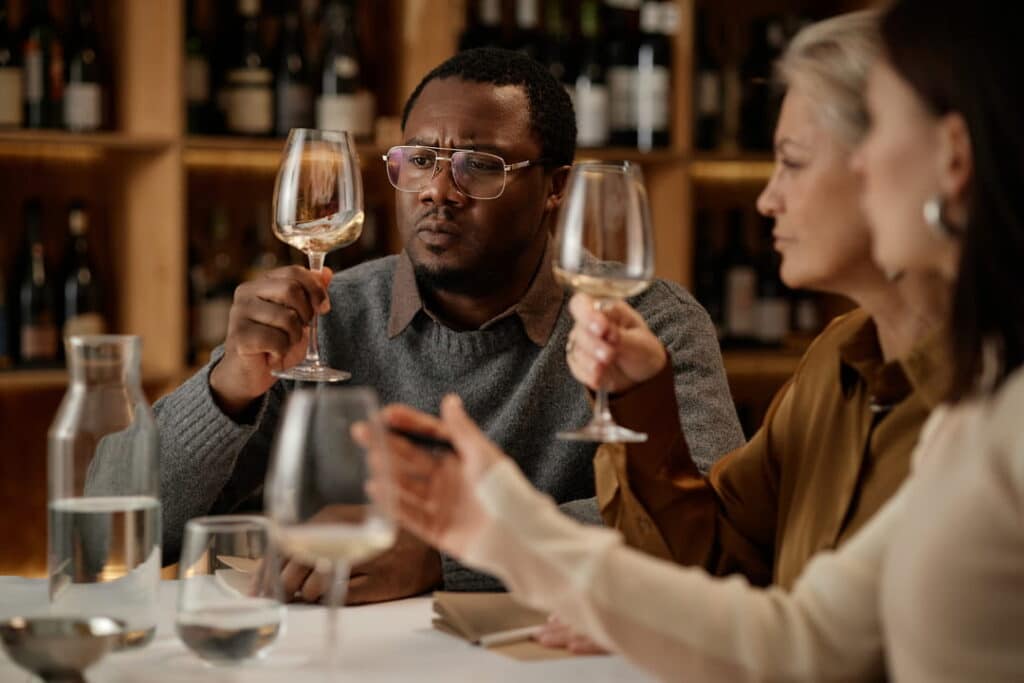
Begin by tilting your glass against a white surface and observing the wine’s appearance. Color depth can suggest concentration or grape variety, while hue offers clues about age. Young reds tend toward purple or ruby, older reds color shift to garnet or brick. White wines deepen from pale straw to gold over time.
Clarity and brilliance matter too. A clear, bright wine usually signals good winemaking and freshness. Then notice the “legs” or “tears” forming as the wine slides down the glass after swirling. Slower, thicker legs often indicate higher alcohol or residual sugar, while lighter, faster legs suggest a leaner style. While legs don’t determine quality, they hint at body and structure.
Look also at the rim, where the color fades toward the edge. A wide, pale rim can suggest age, while a narrow, vivid rim points to youth.
Step 2 – Swirl: Waking up the Aromas
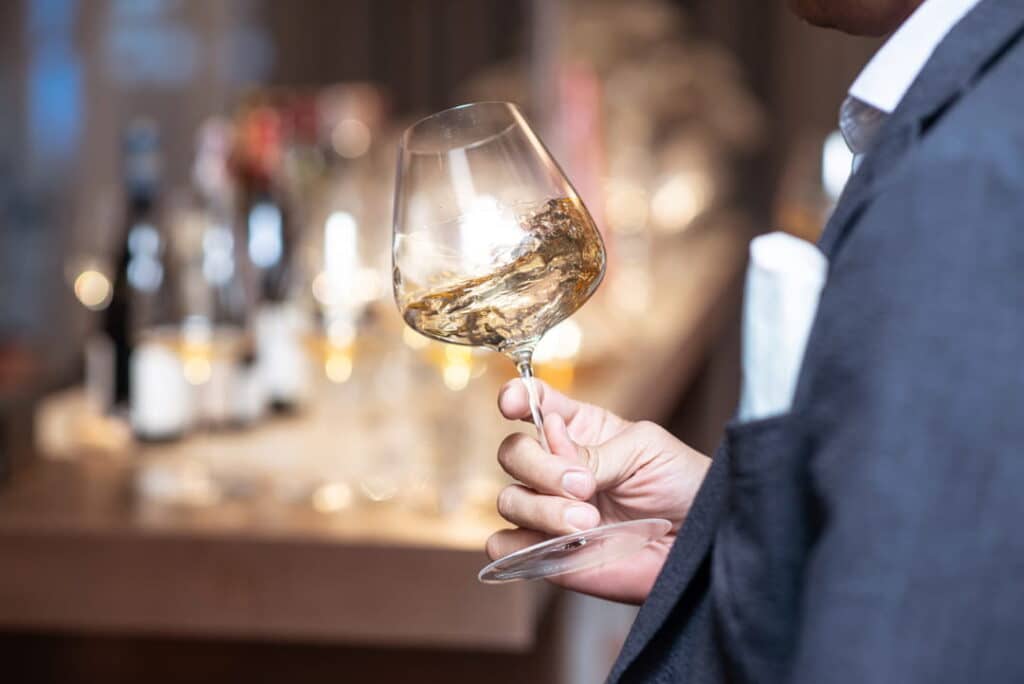
Swirling increases the wine’s surface area, allowing oxygen to interact with it and release aromatic compounds. This simple motion isn’t showing off; it can dramatically change what you smell, revealing layers of aroma that were previously closed.
However, don’t overdo it and accidentally spill all over yourself. Locals tend to swirl with restraint, especially in warm climates, letting temperature and time do part of the work rather than overpowering the wine with air.
A correct pour level is also an important part of this step, as pouring to the widest part of the bowl leaves space for aroma development and effective swirling.
Step 3 – Smell: Training Your Nose Like a Sommelier
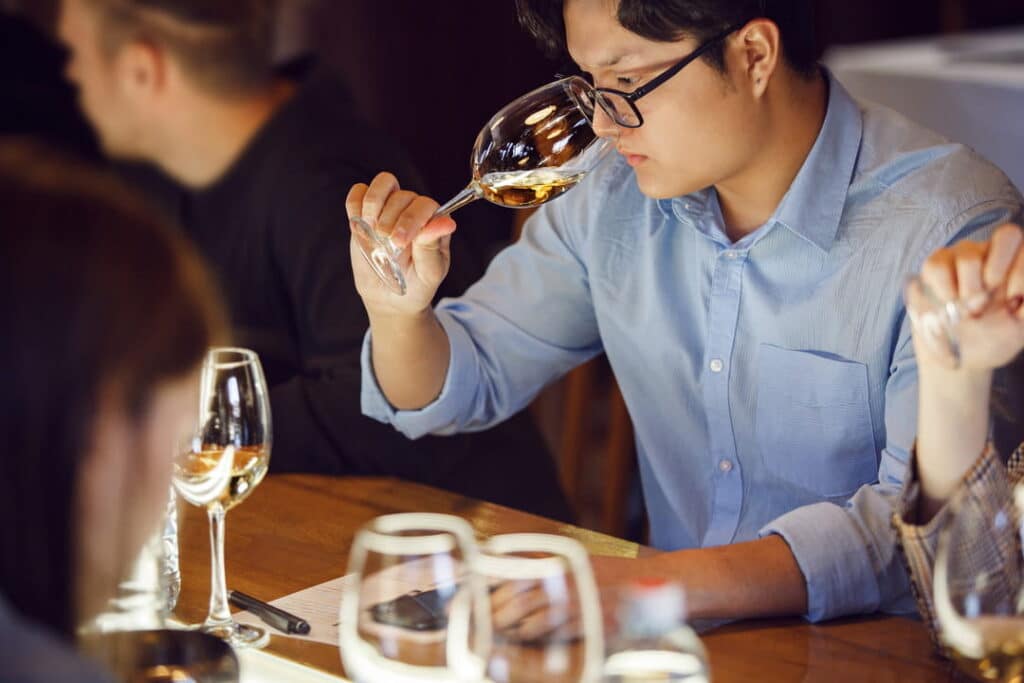
Approach the glass in stages. The first nose, taken without swirling, captures the most delicate and volatile aromas. After swirling, the second nose reveals more complex scents.
Alternate short and deep sniffs to help separate broad aroma categories, like red fruit vs black fruit, before trying to identify specifics.
Aromas generally fall into three categories. Primary aromas come from the grape itself; you’ll smell fruit, flowers, herbs. Secondary aromas develop during fermentation and aging, such as yeast, butter, cream, or brioche. Tertiary aromas emerge with time in the bottle, offering notes like leather, earth, tobacco, or dried fruit.
There’s no need to name everything you smell; recognizing broad families of aromas is enough and better than chasing specific descriptors and getting frustrated. Also, this isn’t a test with only one right answer. You might associate the aroma with something no one else mentions. Everyone’s perception is different.
Step 4 – Taste: How to Taste Wine on the Tongue
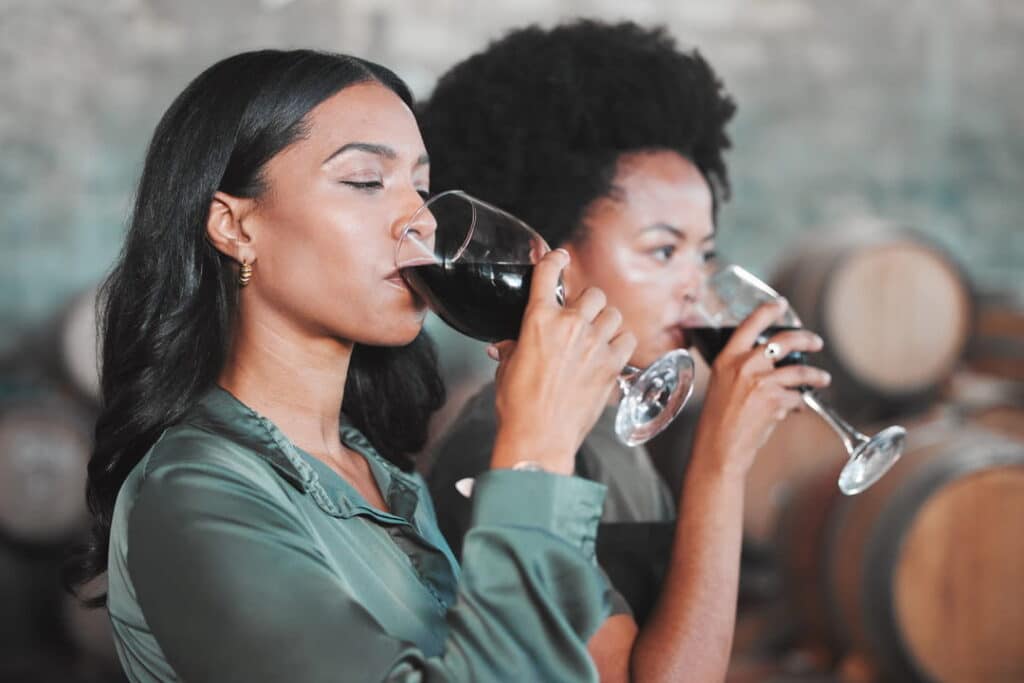
Take a small sip and let it move across your palate. Drawing in a little air, with your lips positioned for something like reverse whistling, helps spread the wine across your tongue and releases additional aromas retronasally. Focus less on flavor descriptors and more on structure: acidity (freshness), tannins (grip), alcohol (warmth), body (weight), and how harmoniously these elements interact.
The mid-palate is where the wine shows its core; thin wines drop off here, while well-made wines carry flavor and texture through the center of the mouth.
Step 5 – Finish: What Lingers on the Palate
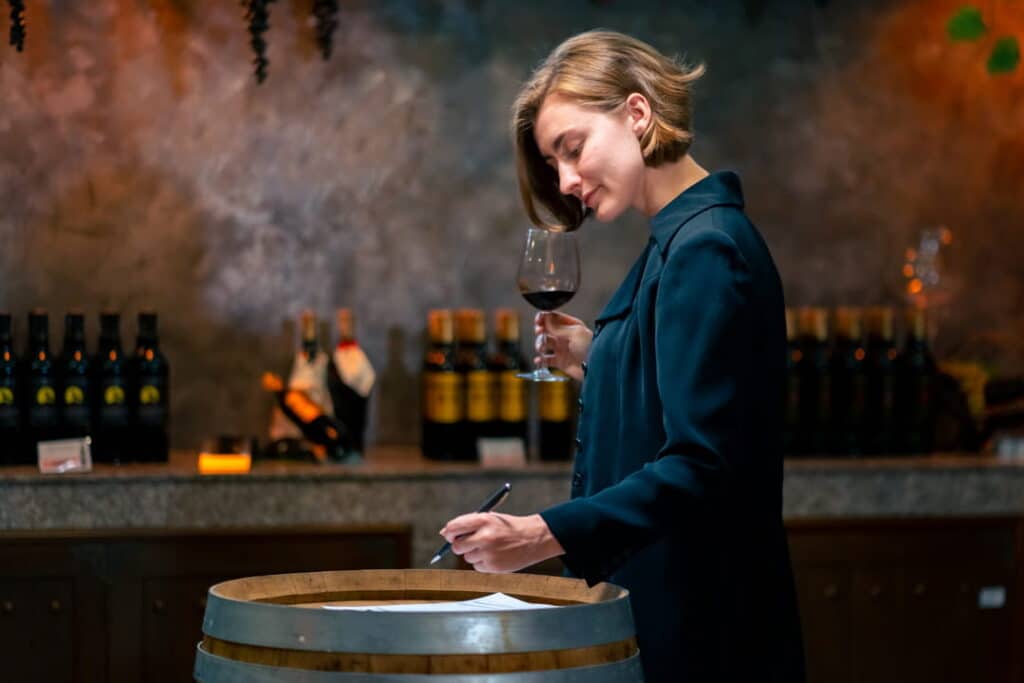
The finish is the wine’s final impression, the length of time flavors remain after swallowing. A short finish fades quickly; a long finish unfolds gradually, sometimes revealing new notes a few seconds later. Locals often judge a wine less by its initial impact and more by how gracefully it lingers. A long finish suggests complexity, a wine made with patience.
How to Properly Taste Wine Without Feeling Intimidated
- There are no wrong answers, only honest impressions. If you sense something, it’s valid, even if you don’t have a poetic name for it.
- Confidence in tasting comes from awareness, not vocabulary. You don’t need technical descriptors, just attention and curiosity.
- Locals tend to focus less on technical analysis and more on how wine fits into everyday life:
- How wine complements food
- How easy and enjoyable it is to drink
- Whether it suits the mood and the occasion
- How wine complements food
In settings where time isn’t rationed, the tasting session becomes lighter and more intuitive. Private winery experiences allow you to taste at your own pace, ask questions freely, trust your senses, and truly enjoy, just as locals do.
How to Do a Wine Tasting While Traveling
When you arrive at a winery, the most important rule is simple: don’t rush. Arriving calmly, on time, and without urgency sets the tone for your entire visit. Locals approach tastings as conversations, not transactions, and that mindset is often mirrored back to you.
Once settled, show interest in the place before the glass. Asking about the vineyard’s history, farming methods, or local grape varieties signals respect for the work behind the wine and often opens the door to better stories and even better pours.
Pacing yourself isn’t any less important. Using a spit bucket is standard practice and widely seen as a sign of consideration, not rudeness, especially when you’re visiting multiple wineries, tasting multiple wines at each. It allows you to stay present and perceptive from the first tasting to the last, turning the day’s experience into something edifying rather than boozy.
How to Taste Red Wine vs. White Wine
While the tasting method stays the same, what to pay attention to shifts depending on the style. Locals adjust their focus naturally, letting the wine’s role at the table guide how it’s evaluated.
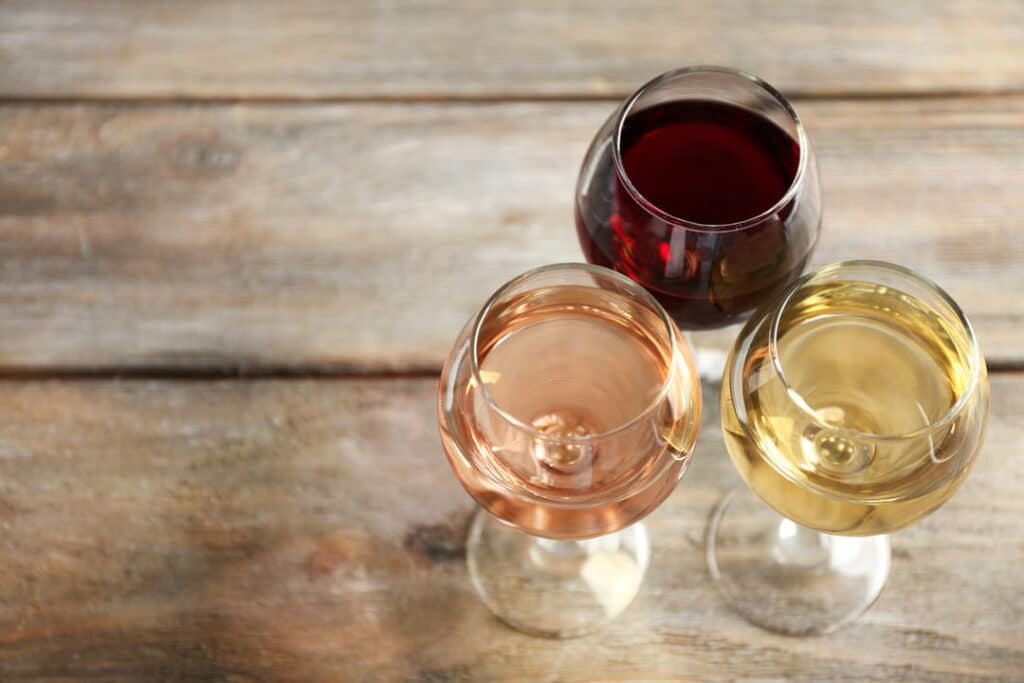
How to Taste White Wine
With white wines, freshness is key. Pay attention to acidity, how lively and mouthwatering the wine feels, as it often defines balance and drinkability. Mineral notes, whether saline, stony, or chalky, can reveal both origin and vineyard soil conditions. Texture matters more than power here; the best whites feel precise and clean, not vague and sugary.
Local tip: White wines should usually be served slightly warmer than fridge temperature, allowing aromas and texture to open up instead of being muted by excessive chill.
How to Taste Red Wine
Red wines invite a closer look at tannins and structure. Notice whether tannins feel silky and integrated or drying and aggressive, and how they support the wine’s body. Balance between fruit, acidity, alcohol, and tannin is more telling than intensity alone. Taken together, they give red wine its structure and speak to its aging potential. Well balanced wines can be cellared for years, even decades, and improve with age.
Local tip: Reds are frequently tasted with food in mind. Rather than standing alone, they’re assessed by how well they complement a meal. In most wine cultures, red wine is made to live at the table, not apart from it.
Practical Tips to Bring Out the Best in Your Wine
A few small adjustments to how you drink can help wine be its best self.
Start with glassware. A properly shaped glass allows aromas to gather and directs the wine to the right part of the palate. Temperature matters just as much: whites lose nuance when over-chilled, reds feel heavy when too warm. Be aware of the placement of your hand as well; hold the glass by its stem to avoid affecting the wine’s temperature. However, do give wine enough time in the glass; many wines open gradually, revealing more with each minute.
When tasting, prioritize food pairing over score chasing. A wine that seems simple on its own can become remarkable alongside the right dish, which is how many wines are meant to be enjoyed.
Context shapes perception. One secret locals know best is that an ordinary wine can taste extraordinary when all your senses are engaged. Beautiful vineyard views, cool cellar air, and friends gathered round a shared table aren’t just nice settings; they’re a crucial part of the experience.
Tasting Wine Around the World: One Method, Many Expressions
While the fundamentals of tasting remain universal, what locals pay attention to is shaped by climate, cuisine, and tradition. Wine can be assessed very differently depending on where you are.
- Mediterranean regions: Tasting is inseparable from food. Locals focus on how a wine supports a meal. Acidity and moderate alcohol are valued because they keep wines versatile and drinkable over long meals composed of many different dishes.
- Continental climates: Here, tasters are often thinking about cellarage. Structure, acidity, and tannins are read as indicators of longevity, with an eye on how the wine will evolve over the years.
- Coastal regions: Proximity to the sea influences both the wines and the way they’re tasted. Acidity, salinity, and lighter body are appreciated for their ability to enhance seafood-based cuisines.
- New World regions: Tastings tend to emphasize clarity of fruit and the winemaker’s personality, with less emphasis on respecting traditions. Locals often assess how cleanly a grape variety expresses itself, and how a boutique wine distinguishes itself from mass market wine.
Taste Like a Local, Travel Like an Insider
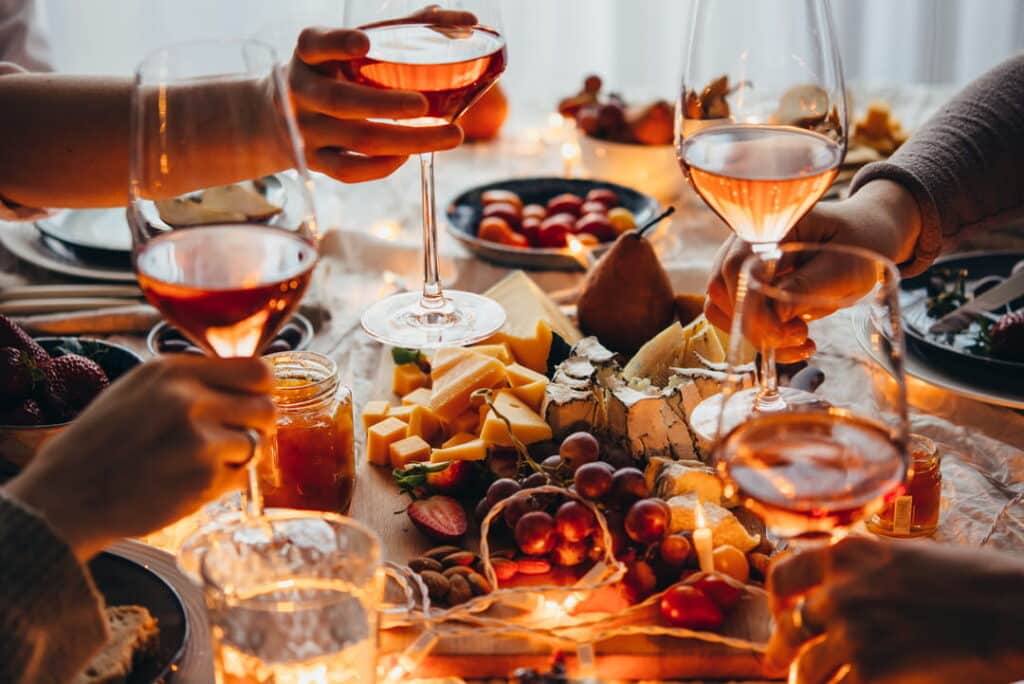
At its best, wine doesn’t just taste good, it captures the essence of the land it comes from and the cultural know-how behind it. Locals don’t choose their wine based on how critics scored it; they consider how a wine fits the occasion. That ease comes from familiarity, not expertise.
When your travel is thoughtfully designed, wine tasting helps tell a bigger story about the land it comes from, and the people who make it. Private, custom wine journeys give you the time and access to slow down, ask better questions, and experience wines as they’re meant to be enjoyed—rooted in their region and shaped by their culture.


