

You’re cruising in Burgundy along the D974, past tidy vineyards with intimidating names, when someone asks the question you’ve been quietly asking yourself: so where do we go?
The Côte de Nuits or the Côte de Beaune? If you only have a day in Burgundy, it’s one of the worst dilemmas in wine travel, and not planning ahead is one of the most common mistakes.
The Côte de Nuits and the Côte de Beaune are separated by fewer than ten kilometers at their closest point, yet they offer very different experiences: different grapes, different village atmospheres, different restaurant scenes, and a different relationship between travelers and estates.
In this guide, we will help you choose which is best for you if you only have a day in Burgundy. Or better still, help you understand why the best approach is to experience both, and how to do that without compromise.
The Côte d’Or Explained: Burgundy’s Golden Slope
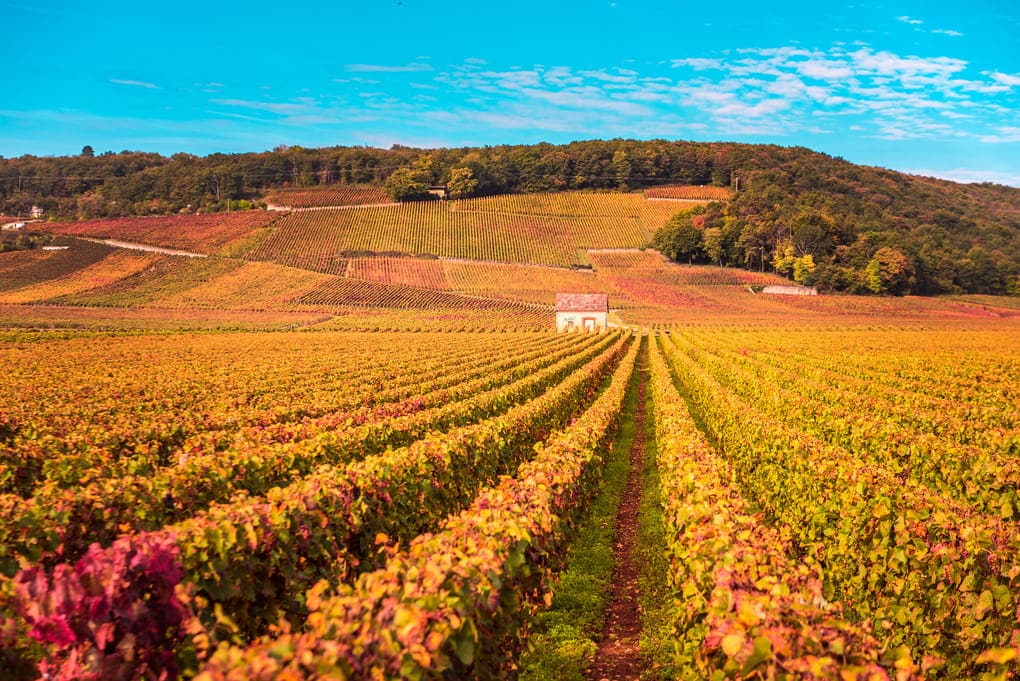
The Côte d’Or — literally the ‘golden slope’ is a narrow limestone escarpment running roughly 50 kilometres from Dijon in the north to Santenay in the south. It is, by almost any measure, the most consequential strip of vineyard land in the world. It’s one of several reasons France remains the world’s most compelling wine travel destination.
If you’re wondering how to approach your first visit, our Road to Burgundy dispatch sets the scene.
The name likely derives from the hillside’s extraordinary colour in autumn, when the vines turn amber and gold. But there is a second meaning that wine travellers tend to find more resonant: this is land that produces liquid worth more per hectare than almost anywhere else on earth.
The Côte d’Or divides cleanly into two distinct halves:
- Côte de Nuits: the northern section, stretching from Marsannay to Corgoloin, dominated by Pinot Noir and home to the region’s most legendary Grand Cru reds.
- Côte de Beaune: the southern section, from Ladoix-Serrigny to Santenay, producing the world’s greatest dry white wines from Chardonnay alongside refined Pinot Noirs.
The split is not merely geographical. The limestone changes character. The exposition of the slopes shifts. The wines, even when made from the same grape, express themselves differently on each side. Understanding that difference is the foundation of any serious Burgundy journey— and our complete guide to wine tasting in Burgundy maps it from end to end.
Côte de Nuits: Where Pinot Noir Reaches Its Peak
It might sound a little romantic, but it’s not an exaggeration, in the Côte de Nuits, centuries of viticultural practice and winemaking expertise culminate in a place where Pinot Noir finds its ideal expression.
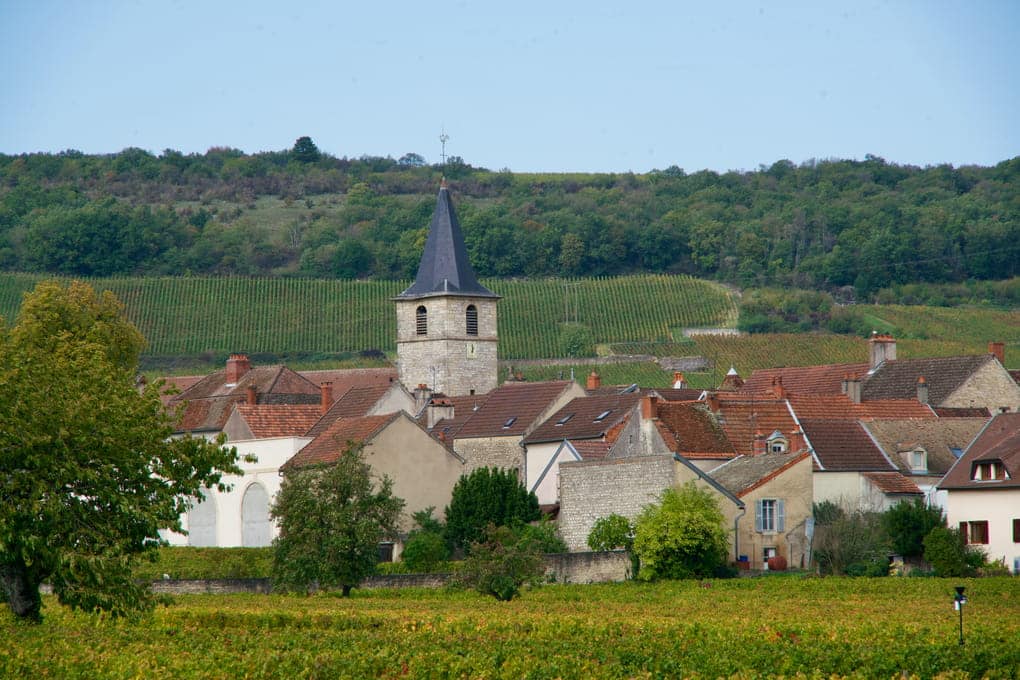
The Côte de Nuits villages begin just south of Dijon. Fixin and Marsannay mark the northern entry to the slope before the grands noms take over, and the tone shifts almost immediately.
There are no big esplanades, no tourist-centric tasting rooms with walk-in hours. Access is earned through an industry contact, an introduction, or a well-designed private itinerary.
A VILLAGE-BY-VILLAGE PORTRAIT
- Gevrey-Chambertin: The most powerful expression of Pinot Noir on the slope. Chambertin and its eight neighbouring Grand Crus produce wines of extraordinary structure — dark cherry, iron, earth, and a tannic architecture that can age for decades. The village itself has a medieval fortified château and a seriousness that matches its wines.
- Chambolle-Musigny: Feminine, floral, and precise. Where Gevrey is power, Chambolle is grace. The Grand Cru Musigny produces what many consider the most elegant red wine in existence: violet and rose petal, underscored by a hint of dark fruit and long finish.
- Clos de Vougeot: The largest Grand Cru in the Côte de Nuits, enclosed by its original medieval stone wall. The Château du Clos de Vougeot, built by Cistercian monks between the 12th and 16th centuries, is among the most compelling cellar visits in Burgundy. A guided tour of the ancient winemaking facilities connects the wine in your glass directly to nine centuries of continuous practice.
- Vosne-Romanée: The most prestigious village in Burgundy. Home to Grand Crus vineyards Romanée-Conti, La Tâche, Richebourg, and Grands Échézeaux. Wines here are defined by a silken perfume and structural complexity that no other village fully replicates. The village is modest in appearance, with a few farmhouses and a church, utterly disproportionate to its reputation. Private visits require advance arrangement and are available as a customization. For serious collectors, this is often the most important stop on the slope.
- Nuits-Saint-Georges: The southern anchor of the Côte de Nuits. No Grand Crus — an anomaly, but a collection of Premier Crus that regularly outperform their classification. Rounder and more approachable than the villages to the north.
| → The Côte de Nuits rewards patience and prior arrangement. Most of its finest domaines do not receive unannounced visitors. Plan private access in advance — or work with someone who already has it. |
Best for:
- Dedicated Pinot Noir enthusiasts and collectors
- Returning Burgundy travellers ready to go deeper
- Those who want to visit benchmark producers
- Anyone for whom the cellar visit matters more than the village square
Côte de Beaune: Elegance, Chardonnay, and Culinary Balance
The Côte de Beaune is the more immediately welcoming side of the slope, not because it is less serious, but because it is more diverse. Chardonnay and Pinot Noir share the hillside. The villages have more life, and the town of Beaune itself serves as an anchor for hospitality and gastronomy in the Côte d’Or.
This is where some of the world’s best dry white wines are made, Premier Cru Meursault and Grand Cru Montrachet.
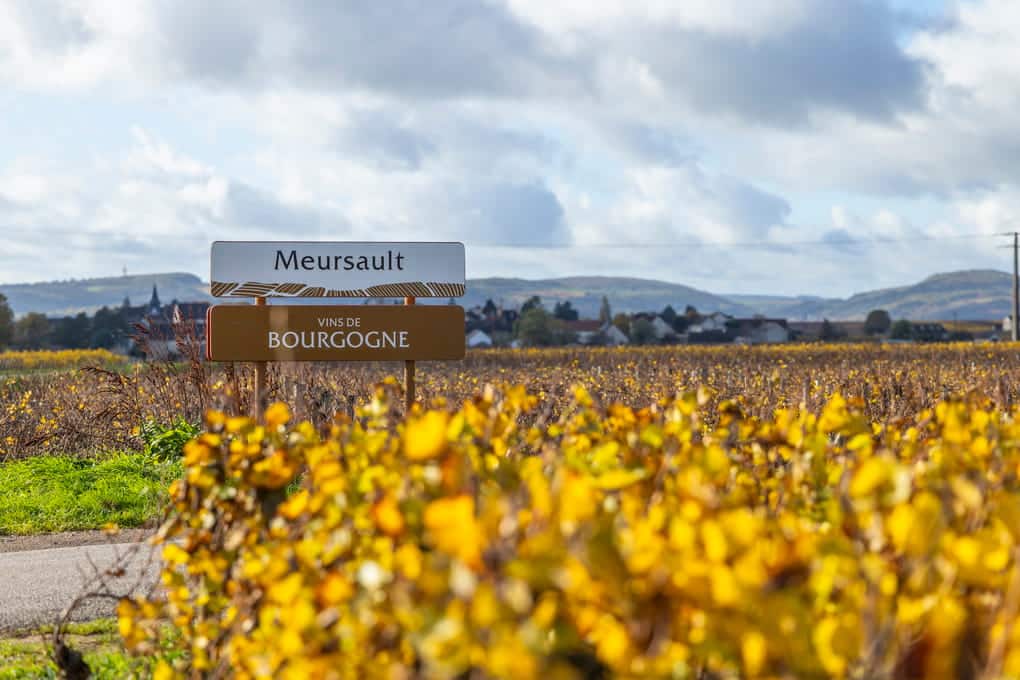
A VILLAGE-BY-VILLAGE PORTRAIT
- Meursault: The most accessible of the great white wine villages, in temperament as much as geography. The wines are generous and layered: toasted almond, ripe pear, honey, and a richness underpinned by mineral tension. The village has a proper Sunday market and a relaxed, unhurried character that makes it ideal for a half-day exploration.
- Puligny-Montrachet: Where generosity gives way to precision. Le Montrachet, the Grand Cru that Dumas claimed could only be drunk on one’s knees, produces white wine of delightful complexity: green apple, flint, white flowers, and a taut mineral frame. The village is smaller and quieter than Meursault.
- Chassagne-Montrachet: Shares the Le Montrachet Grand Cru vineyard with Puligny. The village-level whites tend toward structure and texture; the reds, often overlooked, can be quietly excellent, particularly from older vines.
- Volnay: The most elegant red on the Côte de Beaune. Silky, perfumed, and lifted, closer in temperament to Chambolle-Musigny than to Pommard. The village sits high on the hillside above Meursault with sweeping views down the slope.
- Pommard: The bold counterpoint to Volnay’s delicacy. Fuller, more tannic, with dark fruit and a rustic earthiness. The village is perhaps the most recognisable name in red Burgundy beyond Gevrey, and justifiably so.
- Beaune: The commercial and cultural heart of the Côte d’Or. Home to the Hospices de Beaune, the November auction that defines the Burgundy calendar, a covered market, the best negociant cellars in the region, and a dining scene that punches well above a town of its size.
| → A note on access: a dedicated Côte de Beaune wine day — mornings in Meursault and Puligny-Montrachet, afternoons in Volnay or Pommard is not part of the standard itinerary but is one of the most requested customisations Oenotated designs. If white Burgundy is your primary reason for travelling here, this is worth building in from the start. |
| → The Côte de Beaune is the right starting point for a first visit to Burgundy — not because it is simpler, but because it is more complete. The villages, the cuisine, and the wines form a coherent whole that rewards total immersion. |
Best for:
- First-time visitors to Burgundy who want variety across both red and white
- Food-led travellers for whom lunch matters as much as the morning tasting
- Mixed groups with different wine preferences, as Chardonnay and Pinot Noir coexist here
- Anyone using Beaune as a base: it is the most practical and most liveable town on the slope
Côte de Nuits vs. Côte de Beaune — Side-by-Side
| Feature | Côte de Nuits | Côte de Beaune |
| Primary Grape | Pinot Noir | Chardonnay + Pinot Noir |
| Wine Style | Powerful, structured, age-worthy | Elegant, diverse, layered |
| Atmosphere | Quiet, vineyard-focused | Lively, gastronomic |
| Key Villages | Gevrey, Vosne-Romanée, Chambolle | Meursault, Puligny, Volnay |
| Grand Crus | 24 Grand Cru vineyards | 8 Grand Cru vineyards |
| Tasting Access | Appointment-only, exclusive | More open, visitor-friendly |
| Food Scene | Village bistros | Beaune restaurants, markets, village restaurants |
| Best For | Wine purists, serious collectors | Balanced travelers, first-timers |
Which Should You Prioritize?
There is no universal answer, but there are a few reliable ones based on who you are as a wine traveller and what you are trying to experience. If you’re still in the early stages of planning, our guide on how to plan a luxury wine tasting trip covers the essentials before you choose a region.
Think about it this way:
- “I love bold, age-worthy reds and want to visit benchmark producers.” → Prioritise the Côte de Nuits. Focus on Gevrey-Chambertin, Vosne-Romanée, and Chambolle-Musigny. Secure private appointments in advance.
- “I want world-class white wine and a great food experience.” → Prioritise the Côte de Beaune. Build your visit around Meursault and Puligny, with dinner in Beaune.
- “This is my first time in Burgundy.” → Lean toward the Côte de Beaune. The variety is wider, the atmosphere is more welcoming, and Beaune itself provides an exceptional home base.
- “I’ve visited Beaune before and want to go deeper.” → The Côte de Nuits. The villages are quieter, the access more restricted, and the wines more demanding in the best possible sense.
- “I travel with mixed preferences — some red drinkers, some white.” → The Côte de Beaune comfortably accommodates both, with serious Chardonnay and refined Pinot Noir tastings available in the same day.
How a Private Day Unfolds on Each Side
The following is not a self-contained itinerary, but an illustration of rhythm and pacing. Both sides of the slope reward multiple days. What follows shows what a single well-designed day looks like within a longer private journey.
A DAY IN THE CÔTE DE NUITS
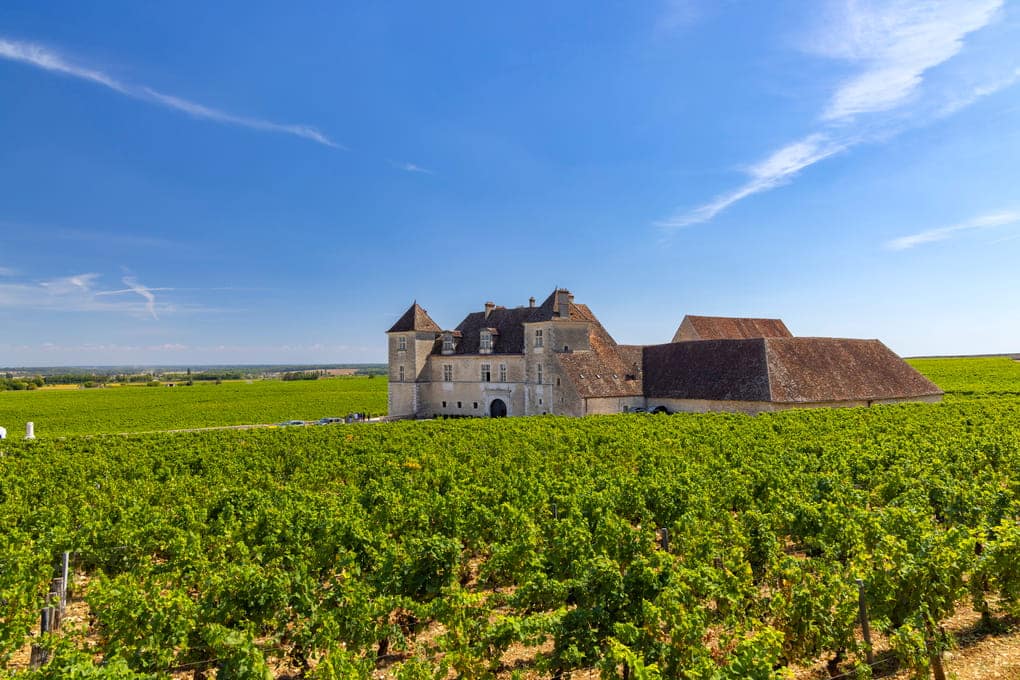
- Morning: Discover the vineyards following the Grand Cru road between Vosne-Romanéee south toward Gevrey-Chambertin in the north. The vineyard markers alone are a delightful sight and help you build a mental map of the region.
- Late morning: Private tasting appointment at a Gevrey domaine. Expect two to three hours, structured around village, Premier Cru, and Grand Cru expressions. (Not sure how to approach a private tasting? Read our guide on how to taste wine like a local.)
- Lunch: A quiet table at a village bistro. The Côte de Nuits is not overflowing with restaurants, which is part of the point: this is a day organised entirely around the vine.
- Afternoon: A second, shorter tasting in Chambolle-Musigny, Vougeot, or Vosne-Romanée, ideally with a producer who farms organically and works at a small scale.
- Evening: Return south to Beaune for dinner, for its lively atmosphere and wealth of excellent restaurants and Burgundy wine bars.
A DAY IN THE CÔTE DE BEAUNE
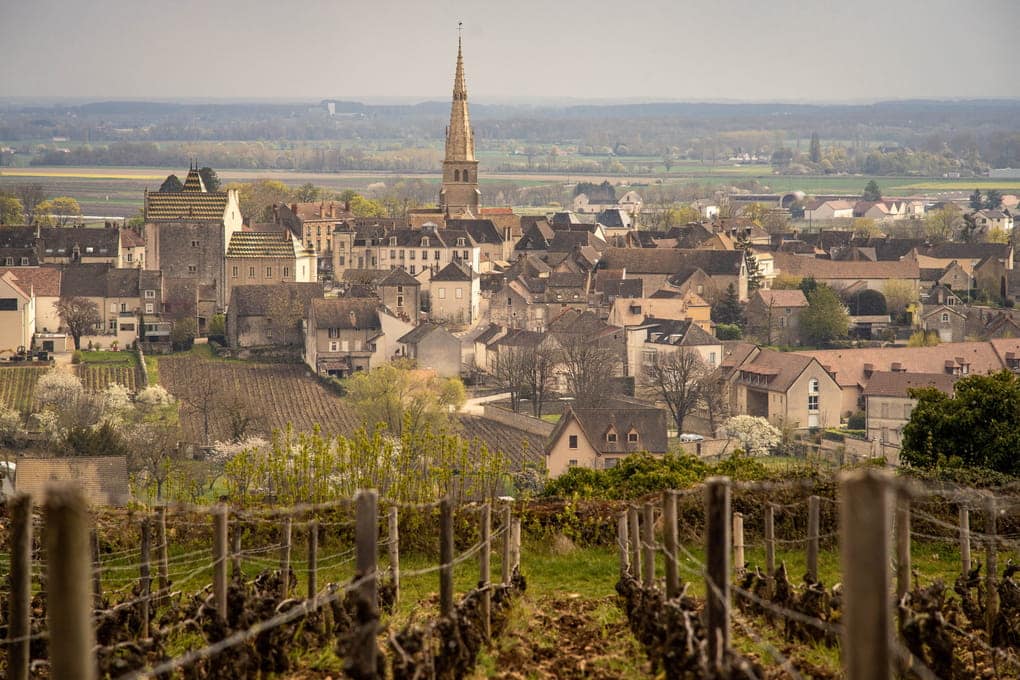
- Morning: Tasting in Meursault: begin with village-level Chardonnay to calibrate the register, then work through Premier Cru expressions. Allow two hours.
- Late morning: Relaxing stroll to explore the village of Meursault.
- Lunch: Visit Puligny-Montrachet or Chassagne-Montrachet for a wine pairing lunch.
- Afternoon: A Pommard or Volnay tasting for contrast: moving from white to red demonstrates the full range of the Côte de Beaune in a single day.
- Late afternoon: Stroll the old town of Beaune. Visit the Athenaeum bookstore and wine shop, or consider a brief stop in one of the négociant cellars for another tasting.
| → A single day on either side is an introduction. Both sub-regions reward three days minimum to feel genuinely explored rather than ticked off, and the most rewarding Burgundy journeys are built around the contrast between the two halves, not a choice between them. |
The Ideal Approach: Both Sides, Relaxed Pace
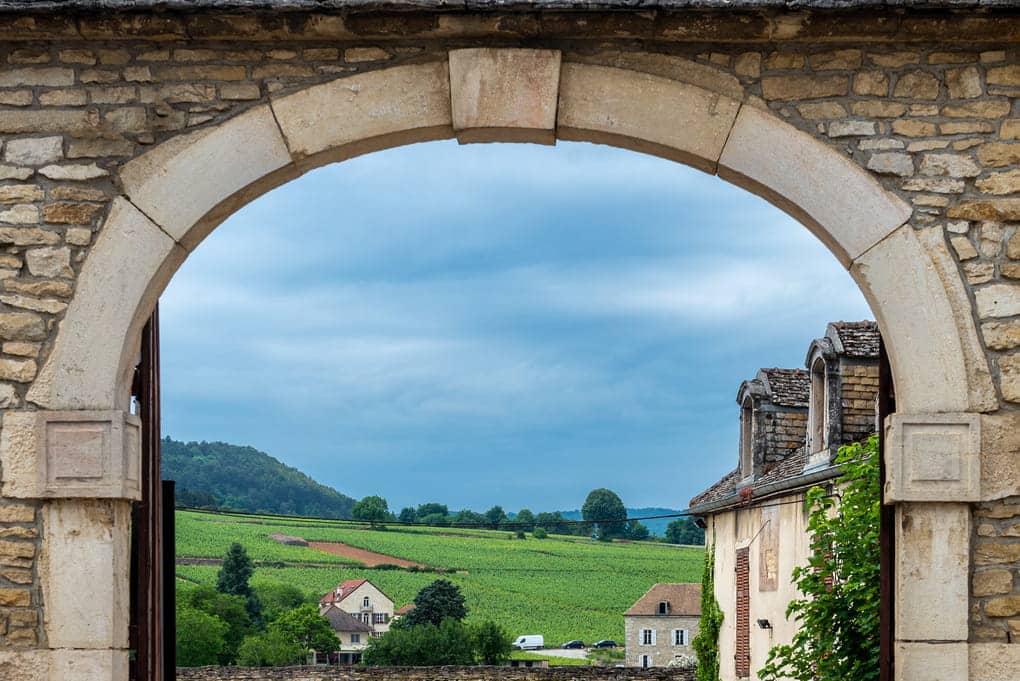
The most common mistake in Burgundy travel is rushing. Half a day in the Côte de Nuits or the Côte de Beaune is only enough time to make you realize you’ve only scratched the surface.
The two halves of the Côte d’Or are best understood in juxtaposition. The shift from a structured Gevrey-Chambertin to a mineral Puligny-Montrachet traces not just a change of grapes, it’s a totally different sensory experience. The relationship between the two is what gives the Côte d’Or its depth as a wine destination.
An ideal itinerary gives each side its proper weight: one full day on the Côte de Nuits with private domaine access, and a full day on the Côte de Beaune, anchored by Beaune in between.
A three-day itinerary allows for the kind of extended cellar visits, long lunches, and unhurried village time that constitutes a genuinely memorable Burgundy experience.
Timing matters too — our seasonal wine travel guide breaks down the best months for Burgundy and other regions.
How Oenotated Travel Designs an Unforgettable Côte d’Or Experience
Private access is key in Burgundy wine travel. The domaines that produce the most compelling wines are seldom open to walk-in visitors. Building a meaningful itinerary requires either years of relationships or a travel partner who already has them.
Oenotated’s Côte d’Or approach is built around four principles:
- Private appointments at small, high-integrity producers on both sides of the slope, including estates that do not take group visits or appear in standard tours.
- Balanced pacing across reds and whites, so that neither side is treated as an afterthought.
- Culinary integration: the itinerary includes reserved tables at authentic addresses in Beaune, Dijon, and village appellations with wine pairings guided by the same producers visited that day.
- Full customization around your preferences. Pinot Noir collector? The itinerary focuses on the Côte de Nuits, Volnay, and Pommard. Chardonnay-led? Puligny, Meursault and their neighbours become the centrepiece.
This is not a group tour. It’s a curated private journey, designed from scratch around your travel dates, your palate, and what you are genuinely trying to understand about Burgundy and bring back home.
Plan Your Burgundy Journey Around What You Love
Whether your Côte d’Or explorations begin in Gevrey-Chambertin or Meursault is a question of taste, and time. We help you optimize both. The Oenotated Burgundy & Northern Rhône private journey covers both sides of the Golden Slope, with private domaine access, expert oenologist guides, chauffeured transportation, authentic local cuisine, elegant accommodations, and an itinerary built entirely around your priorities.


