

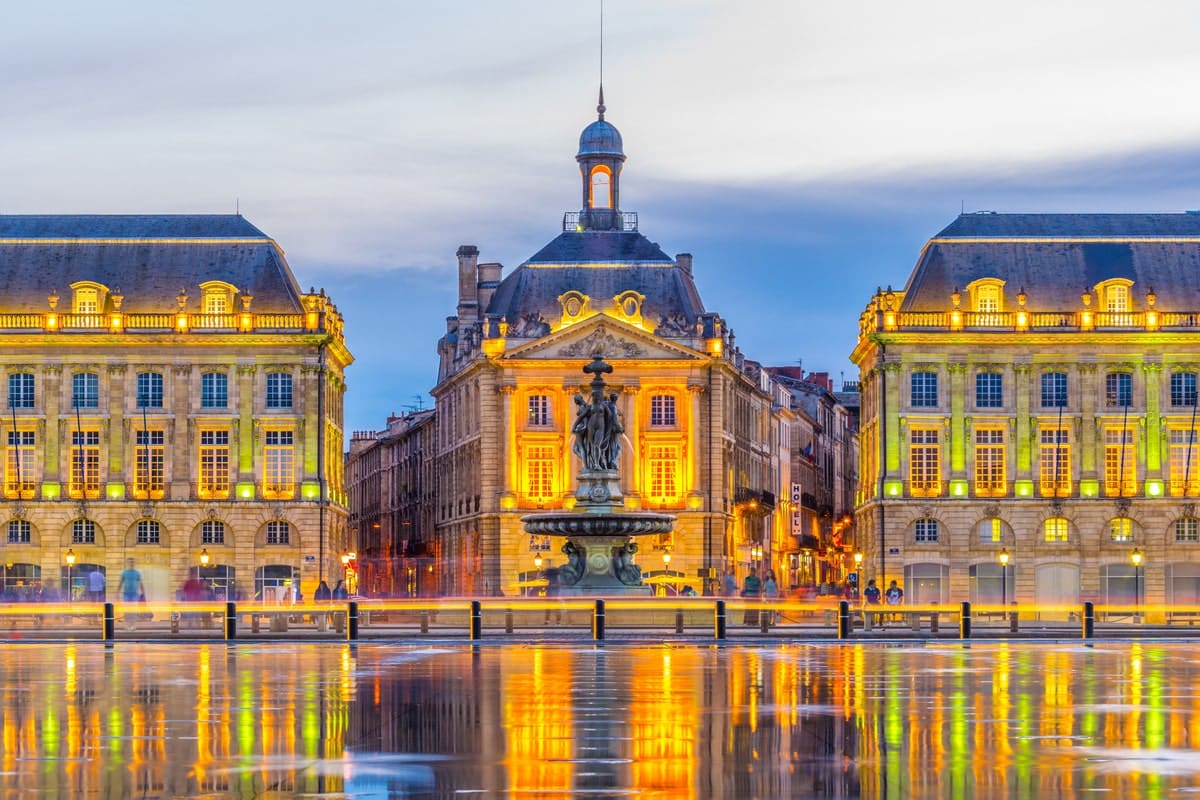
While Bordeaux is a distinctly French wine today, that wasn’t always the case.
For the three centuries prior to the Hundred Years War, the British Crown ruled Aquitaine and helped seed the global foundations on which Bordeaux sits today. The light red style of claret became wildly popular both for its accessibility and taste.
After returning to French control, the relationship only strengthened. A popular 17th century London tavern named Pontack’s Head elevated “Ho Bryan” (Haut Brion) wine and fine dining à la française. Dutch traders were also active participants, draining the swamps of Médoc to expand the land under vine, and creating the shape of the region we know today.
Bordeaux Blends for a Global Palate
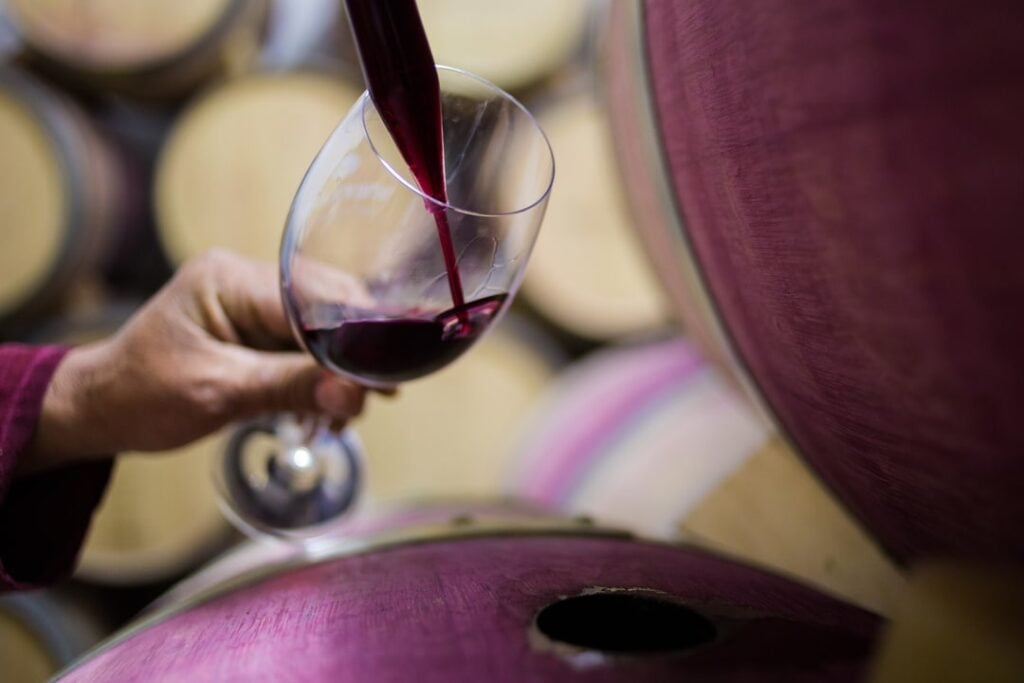
Bordeaux style has also evolved as a result of this outward facing culture. When Americans became larger buyers through the late 19th and 20th century, estates adjusted their palate. A young Robert Parker called the 1982 vintage as legendary ahead of every other lukewarm critic, and the Yankees had truly arrived. Many châteaux adjusted their blends to please his 100 point regime of high alcohol and big flavor.
Whether it’s a structured Pauillac epitomizing the finesse and rigor of Cabernet Sauvignon, or the lush melting fruits of Pomerol’s Merlot, Bordeaux remains an international crowd pleaser. Tables from Hong Kong to Peoria celebrate its ageability, elegance, and approachability.
What are the Bordeaux Premier Cru Estates?
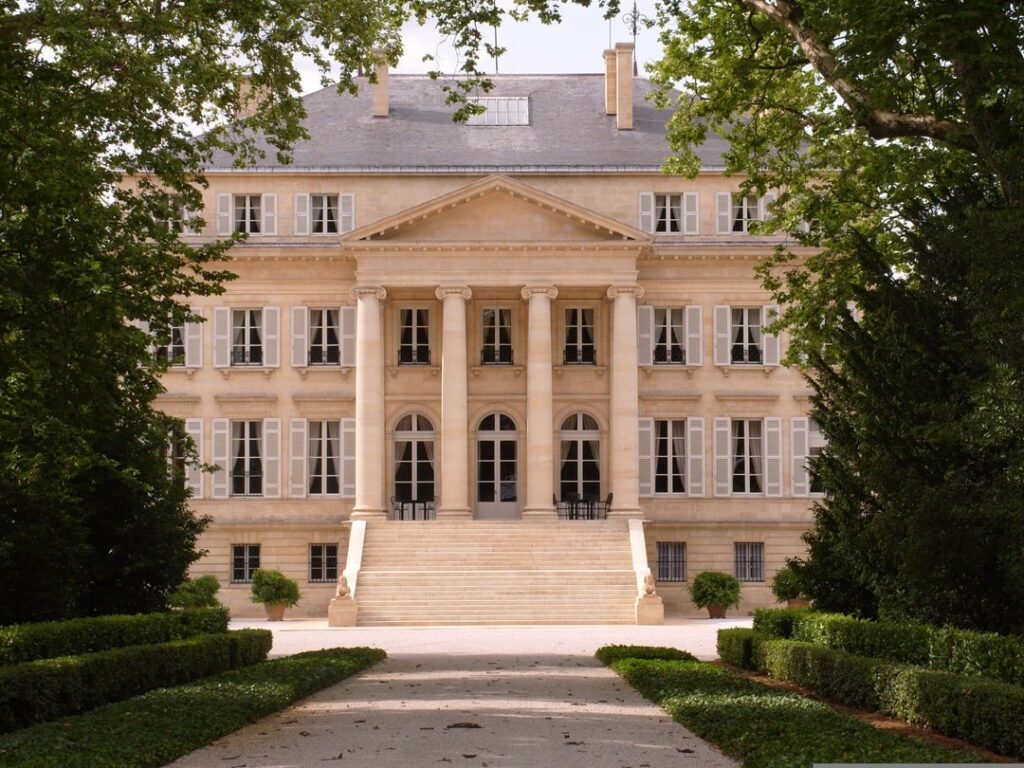
Bordeaux’s mercantilist history also shows itself in the classification of wines. The term “Grand Cru” means something very different from Burgundy, where specific plots are ranked and designated.
In Bordeaux, Châteaux themselves receive the designation. For Left Bank wines the defining taxonomy was cemented in anticipation of the 1855 Exposition Universelle de Paris. Napoleon III asked for a ranked list, which the local chamber of commerce collaborated with negociants to produce. This of course resulted in an ordering that was based purely on price.
Four wines (Latour, Lafite Rothschild, Margaux, and Haut Brion) were selected as Premier Cru (first growth), and sixty one others were sorted into the remaining four divisions: second, third, fourth, and fifth growth estates. Only Haut Brion did not come from the Médoc. One of the exceptional changes to this system was made in 1973 when after vocal lobbying from owner Baron Philippe, Mouton Rothschild was granted top billing.
A formal classification of the Right Bank didn’t emerge until a century later, when again commercial interests prompted an organization and assessment of quality. The Saint-Émilion ranking takes place every ten years and offers mobility, both adding and removing houses. Recently wines like Figeac and Pavie have been promoted to “Classe A”, which has prompted former A-listers like Angélus, Ausone, and Cheval Blanc to leave the system.
There is currently no official designation for Pomerol, though price alone has names like Petrus and Le Pin trading at two or three times the value of their Bordelais competition.
Each village brings its own unique terroir and style of Bordeaux. But while a muscular Saint-Estèphe might seem unrelated to its Merlot and Cabernet Franc cousins over the river, they are both firmly rooted in their various alluvial landscapes and traditions of blending in the winery.
The city of Bordeaux itself is the beating heart of the wine trade. Every year the en Primeur sales are held here, where future allocations are sold before the wine is bottled, to be delivered after a few years of aging in the caves de châteaux. Looking towards the vineyards, on the Left Bank (following the Garonne river towards the Gironde Estuary and the Atlantic Ocean) we have the Médoc and its legendary First Growth estates. On the Right Bank lie the softer but no less serious appellations of Saint Émilion and Pomerol.
Bordeaux Left Bank: Médoc
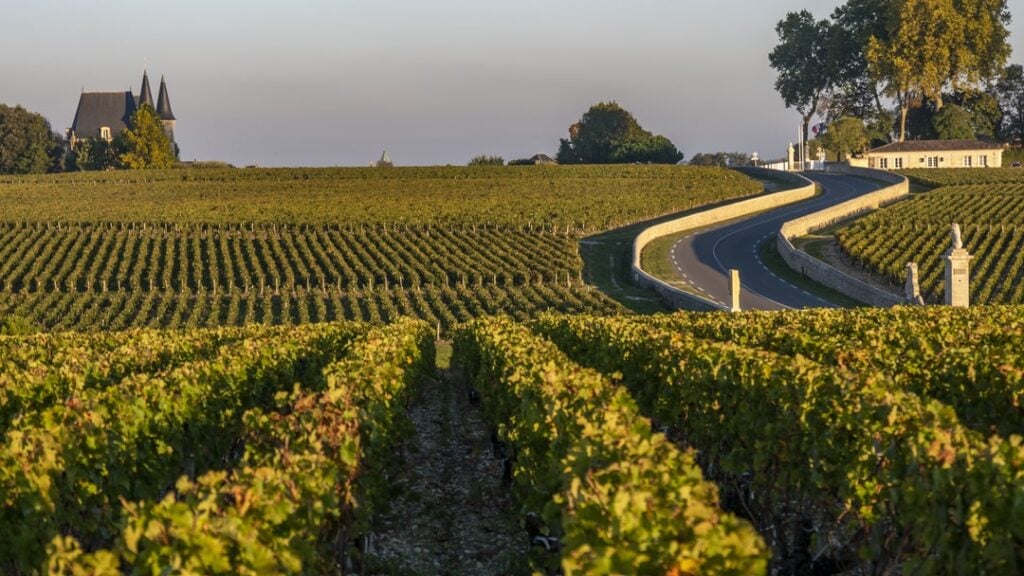
Starting in the north and east we have the villages of Saint-Estèphe, Paulliac, and St. Julien. These are the prototypical wines of Bordeaux’s Left Bank. Gravel plateaus above the Gironde produce Cabernet Sauvignon driven wines of structure and tannin. This sits over limestone, with some clay depending on the site, which provides both excellent drainage and heat retention during cooler maritime evenings. Classically these will have tasting notes of black currant, graphite, and cedar.
Château Lynch-Bages
Château Lynch Bages sits right in the heart of Paulliac, and though it is a Fifth Growth, it’s surrounded by premium neighbors and punches well above its classification. Perched on top of the Bages plateau, the blend is dominated by Cabernet Sauvignon, though they have been known to use up to 30% Merlot. Petit Verdot and Cabernet Franc are also used in small quantities for a highly typical combination.
Château Lynch Bages has stayed on the forefront of modern vinification techniques, rebuilding their chai in 2020, and using numerous technologies to aid in extraction, allowing them to produce a signature freshness even during increasingly warm vintages.
This consistency rewards consumers across both “good” and “bad” years, and makes the wine more approachable during its youth. But don’t confuse that for lack of ageability. This wine is structured to evolve with all the pencil shavings, tobacco, and dark fruit that Bordeaux lovers crave.
Château Beychevelle
Just south of Pauillac is the town of St. Julien which contains very similar terroir. As we pull further away from the Atlantic we’ll find more even ripening with a moderating climate.
Château Beychevelle is on the southern end of the appellation, and the main house dates back to 1565. It has a reputation as the “Versailles of the Médoc,” and is one of the most photographed in the region. The story surrounding its name comes from when Duke of Epernon and Admiral of France Jean-Louis Nogaret de La Valette owned the property. Legend has it that he required ships sailing past to lower their sails in salute, “baisse voile” in French, which became Beychevelle.
Under the current ownership of Suntory and Castel, there has been a significant investment in technology, producing wines with finer tannin management and greater precision. Wines are planted across 90 hectares of land at a relatively dense concentration, forcing the roots deep to encourage vigor.
We’ll find slightly more Merlot in the blend as we head south, and here it’s often upwards of 40%. This lends itself to a profile that signifies the difference between Pauillac and St. Julien – the same classical structure but with more plushness and early charm than the more austere Pauillac.
Drink this young between five and ten years for the vivid blackcurrant and plum, or wait longer for tertiary notes of leather, cedar, and dried violet—classic age worthy Bordeaux.
Château Giscours
As we journey further up the river towards the city, we arrive in Margaux, a Left Bank appellation that is distinct from the first three. The terroir has similar gravel to its neighbors but is often lighter and more varied. Here we find wines that are known for aromatic lift and finer tannins.
While the eponymous Château Margaux reigns amongst First Growths, there are numerous high-quality Châteaux in the region. Château Giscours is one of the oldest wines in the Médoc with records indicating the production of a fortified wine as early as 1330. A series of owners have increasingly modernized the production, and since 1995 the Jelgersma family of the Netherlands has continued to invest in the property, with a strong focus on sustainability and overall ecosystem health.
The vineyards are the southernmost of all Left Bank Châteaux classified in the 1855 ranking. Here the soil again becomes more Cabernet Sauvignon friendly, with gravel over sand, creating well drained but relatively nutrient poor soils. Along with their relatively dense plantings this encourages deep rooting and resilience in the vines.
The blending ratio is closer to 65% Cabernet Sauvignon with 30% Merlot, providing a linear structured profile under the Margaux signature aromatics of violets and lavender. With up to 50% of the aging done in new French oak, the wine has a seductive mouthfeel followed by a precise and lengthy finish.
With slightly more backbone than the classic Margaux, the house touts their “taffeta” structure and silky tannins. The fruits are bright with a gentle ripeness early on, evolving into notes of cassis, dried cherry and plum compote. As the tannins evolve into a suede like texture we see the signature perfume remain long past the twenty year mark.
Bordeaux Left Bank: Graves
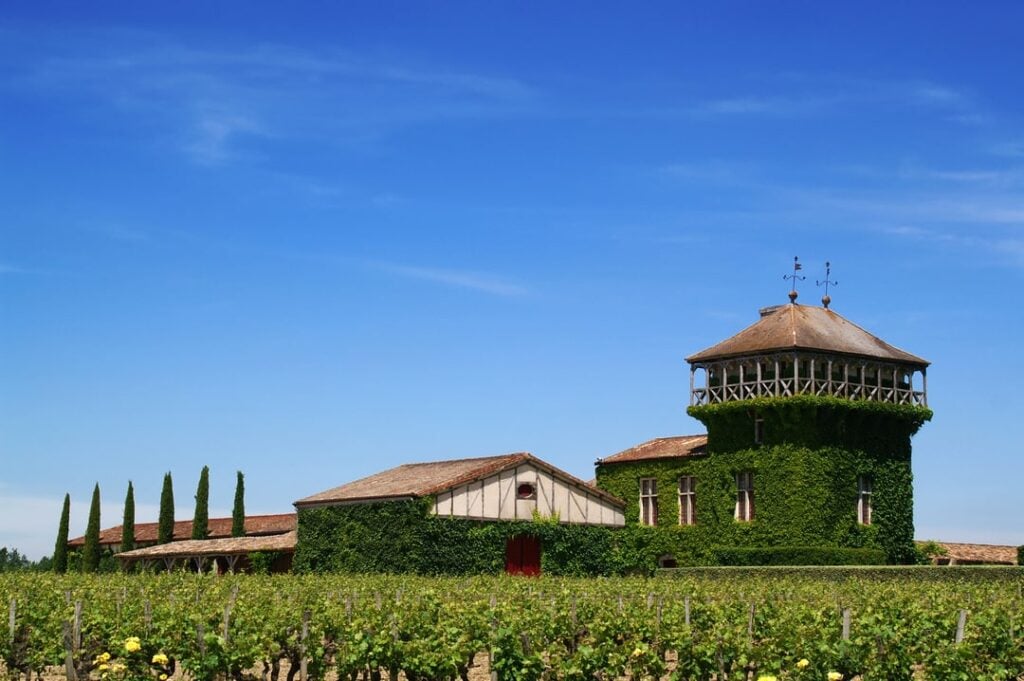
Gravel has been a consistent theme of the Left Bank terroir and as we approach the city of Bordeaux we arrive in a town named for exactly that – Graves. Here the history runs even deeper than the Médoc; Romans were making wine in Graves two millennia ago. This was also the heart of production during England’s rule of Aquitaine, and the birthplace of claret. Château Pape Clement is considered the first named Bordeaux estate.
While certain Left Bank Châteaux do produce a white wine, here in Graves we have the spectrum of red, dry white, and sweet white—the only Bordeaux region to contain all three. To this day the legendary wines made from the Noble Rot on Semillon grapes also come from the sub regions of Sauternes and Barsac.
Château Smith Haut Lafitte
Until 1987, Pessac-Léognan was considered part of Graves, but these premium terroirs were carved out to distinguish themselves. We have the same gravel terraces, but with deep beds of sand and sometimes limestone deposited by Ice Age glaciers. As we’re closer to the city, the vineyards are often interspersed with pine forests and hedgerows.
Château Smith Haut Lafitte was first planted around 1365 on a gravel hill called “Lafitte,” and the first half of the name came five hundred years later from owner and Scottish merchant George Smith. When it passed back to French hands in the mid-19th century, then mayor of Bordeaux Duffour-Dubergier elevated its status as a Grand Cru.
After several changes of hand, in 1990 former Olympic skier Daniel Cathiard and his wife Florence fell in love with the space and again made significant strides in quality. While not certified organic or biodynamic, they follow a specific approach called bio-precision that uses both advanced winemaking technology alongside vineyard methods such as natural compost, horse ploughing, and bee hives around the property.
Smith Haut Lafitte produces exceptional red and white wines, which both benefit from the gravel soils allowing drainage underneath, and the intentional biodiversity above. The pale color of the gravel reflects the sun, enhancing the ripening. The reds are dense, polished, and classically smokey. Whites are full bodied with citrus and stone fruit backed by a slightly flinty edge.
Château La Mission Haut-Brion
While it shares half the name First Growth Haut Brion, La Mission Haut-Brion is far from a second cuvée, but a distinct property producing excellent wines of equal quality. The history dates back to the original owner of Haut Brion Jean de Pontac, who acquired the land across the road and began planting there.
The estate was passed through marriage to a relative of de Pontac who eventually bequeathed the land to the Congregation of the Mission, earning the “La Mission” title. The clergy continued to produce and even sell the wine here and maintained ownership until it was retaken during the French revolution and sold at public auction.
Though it was passed over in the 1855 classification, La Mission Haut-Brion continued to maintain its quality as it traded through several American owners. When it came up for sale in 1983 it was scooped up by the Prince of Luxembourg’s wine group Clarence Dillon and finally reunited with Château Haut Brion.
Here the red blend is nearly equal between Merlot and Cabernet Sauvignon, which often makes it more approachable when younger. The estate is also famous for its white Bordeaux wine which makes up approximately 10% of the land under vine. This is approximately two thirds Semillon and one third Sauvignon Blanc, creating an unctuous and textured wine, with the backbone of limestone soil.
Aging in 100% new French oak lends the wine a particular richness and intensity. The full-bodied red contains flavors of blackberry and plum and are balanced with a rich perfume of smoke, truffle, and spice. On the white side we have flavors of citrus oil and lanolin, with honeysuckle emerging as the wine evolves through its decades of aging potential.
Bordeaux Right Bank: Saint-Émilion
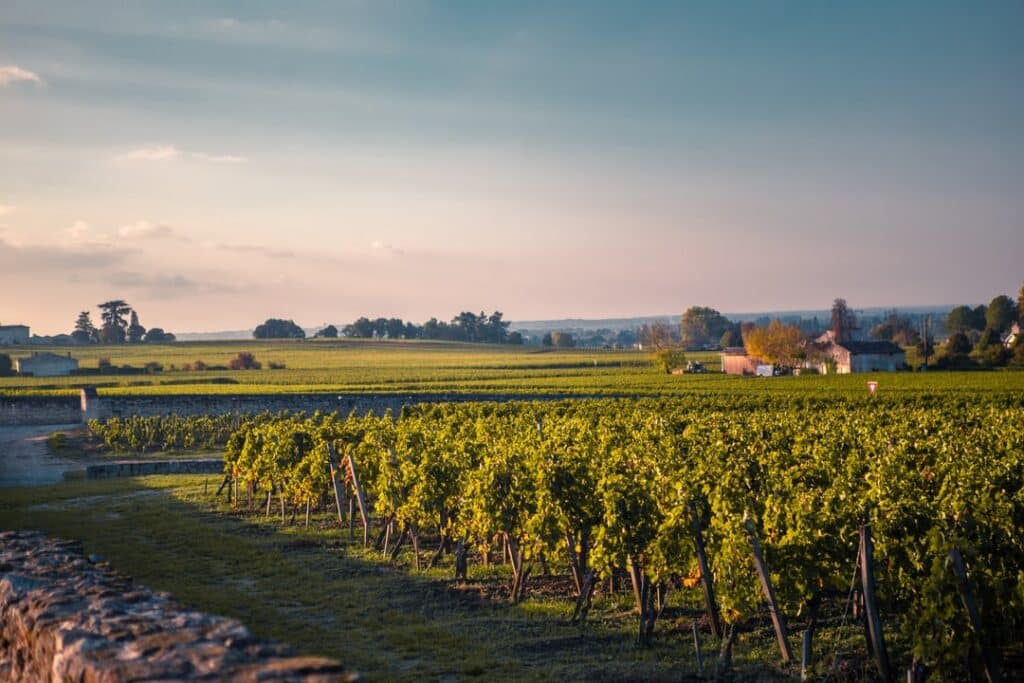
As we leave the Left Bank, we first head to Saint-Émilion where Merlot reigns supreme. On Bordeaux’s Right Bank, winemaking history goes back equally far, with Roman settlements also producing wine and later, Benedictine monks in the 8th century. Since 1999 the “Jurisdiction of Saint-Émilion” which includes the panoramic hilltop village and surrounding vineyards has been marked as a UNESCO World Heritage Site. Culture here is rooted less in the aristocracy of the Médoc than the Benedictine monks who built a charming hill town perched on limestone.
This high flat plateau surrounding the town is where some of the most prized cuvées come from. Here the bedrock is covered with very thin topsoil, and the vines must root their way into cracks and fissures. There is excellent drainage and it creates wines with a minerality to balance the lushness of the grapes. Towards the edges we have more clay dominated soil, which helps retain water and is ideal for Merlot. Cabernet Franc will tend to prefer the cooler, more well drained plateau.
Château Soutard
Château Soutard is one of the oldest estates here, with plantings documented as early as the 17th century. Like many vineyards, it was passed around during the 19th and 20th centuries, is now owned by La Mondiale, and sits squarely as a Grand Cru Classé, a distinction requiring lower yields and longer élevage.
The thirty-hectare plot sits less than a half a mile from town, where the combination of altitude, drainage and rock structure help produce elegant and ageable wines. The clay and limestone plateau are perfect for a blend of approximately 60% Merlot and 30% Cabernet Franc, with Cabernet Sauvignon and Malbec rounding out depending on the vintage.
Thirty-year-old vines are harvested manually, and aging is in roughly half new French Oak and half older barrels, producing a wine that combines the elegance Saint-Émilion is known for with a generous and modern texture.
The Merlot in clay brings the plush and ripe fruit body, while Cabernet Franc in limestone balances this with a chalky line and lifting floral notes. A young Soutard will provide dark and glossy fruits, with a polished tannin structure that benefits from decanting. As it evolves, we get black cherry liqueur and tertiary notes of leather and forest floor.
Bordeaux Right Bank: Pomerol
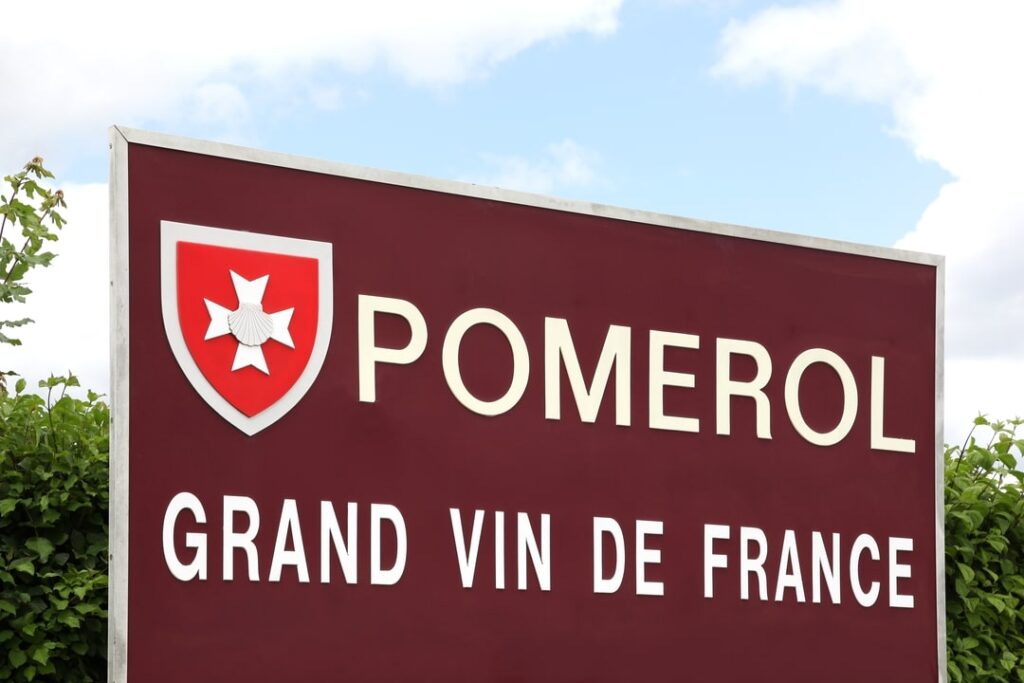
Traveling just north and west of Saint Émilion we have Pomerol, a quiet town that needs no formal distinction and survives exclusively on reputation. Less imposing than its neighbor, the esteemed terroir feels more like a gentle bump in the landscape. The most famous houses don’t even hang a sign outside. Underneath this quiet village sit deep clay soils that are perfect for Merlot.
Château Beauregard
Château Beauregard’s history goes back as far as the 11th century, when the vineyards were tended by the Knights Hospitallers of St John of Jerusalem—their cross remains on the label today. Several esteemed families owned the Château through the 19th and 20th century, before ownership was ultimately passed to another French conglomerate Foncier Vignobles in 1991. As with many of its peers, this new stewardship allowed for modernization and significant investments towards quality.
Relatively small for Bordeaux, these seventeen hectares sit on the classic mix of clay-gravel and sand-gravel, which allows for both drainage and moisture retention. The resulting wines are both fresh and elegant, a contrast to the brute power of the Left Bank.
Here we see even more Merlot in the blend – up to 70% – with the remaining amount being Cabernet Franc. This is low for Pomerol, as many of the wines are 100% Merlot. This creates the signature style of Beauregard, with the blend delivering aromatic complexity to balance the plushness of Merlot.
The house has been certified organic since 2009, and yields are kept moderate. Roughly half new French oak barrels are used, creating a wine that has elements of the older and lighter style of Pomerol, as well as a hint of the plusher modern influence. Tannins aren’t quite as chewy as the Left Bank but rather aligned with the common Pomerol description as an “iron fist in a velvet glove.”
We’ll taste ripe red and black fruits here, as well as leafy herbs and cooling mint. As the wine ages the silky yet substantial tannins will melt into a more suede-like texture, as the tertiary notes of tobacco and sous bois balance fig and ripe black cherries.
Why Visit Bordeaux for a Wine Tasting Tour?
Bordeaux is a collection of appellations unlike any other, producing both exceptional wines and leaving a lasting impact on global wine production and trade. The outward facing history and commercial instincts have evolved into a tapestry of wines that have become a lynch pin in any serious collector’s cellar. While the top wines reach prices of dizzying heights, there is a vast swath of high-quality wines that come from the Bordeaux region to match almost any taste or occasion.
FAQs: How to Find the Best Bordeaux Wine Tour
What is the difference between Left Bank and Right Bank Bordeaux Wines?
The key difference is in the blend. Left Bank Bordeaux wines typically feature Cabernet Sauvignon as the dominant grape in their blend. As a result, Left Bank wines tend to be more structured and tannic. Right Bank Bordeaux wines typically feature Merlot as the dominant grape in their blend. Merlot dominant blends tend to be a little more plush, juicy, and round in the mouth. The proportion of Cabernet Sauvignon to Merlot is up to each winemaker, based on the style and profile of wines their houses are known for, the soil conditions in their vineyards, and the weather from vintage to vintage.
How do I choose which Bordeaux wineries to visit?
First, think about what kind of wine you like to drink. Do you prefer more aromatic, austere, herbal wines? Or rounder, juicier wines with soft tannins? Are you interested in prestigious, collectible wines from major estates or casual, everyday wines and small family producers? For most wine lovers, the answer is a bit of both. And in Bordeaux, you don’t have to choose one or the other. A custom Bordeaux wine tour with Oenotated Travel lets you create a personalized experience with wine tastings tailored to your tastes, style, and budget.
How many days should I spend in Bordeaux?
We recommend spending three nights in the city of Bordeaux. This will give you enough time to enjoy Bordeaux’s restaurants, wine bars, museums, and attractions, as well as visiting both the Left Bank and the Right bank for two days of Bordeaux wine tastings. For a deeper immersion in the region, it’s best to get out into the Médoc, Graves, and Saint-Émilion and overnight in the vineyards. Our 13-day Luxury Wine Tour in Southern France is a customizable journey into the wine, food, and craft traditions of Bordeaux and beyond.
What does a Bordeaux wine tour include?
A basic wine tour typically includes visiting two wineries in three or four hours, spending about 90 minutes at each winery. Depending on the season, you will visit the vineyards to see where and how the winery grows their grapes, the vat rooms where wine is vinified and the cellars where it is aged, then taste a selection of their wines across different styles and vintages. Oenotated Travel wine tours and custom itineraries go beyond basic. They include multiple private wine tastings, culinary experiences, cooking classes, artisan craft workshops, guided historical and cultural tours, and luxurious accommodations to create an immersive experience of the best that Bordeaux and southern France have to offer.
How do I book a custom Bordeaux wine tour?
Booking your custom Bordeaux wine tour is easy. Just contact us to start a conversation. We will help you create a once in a lifetime Bordeaux wine experience customized to your travel dates, preferences, and budget.
When is the best time to visit Bordeaux?
Every season offers its own charms, but the best time to visit Bordeaux for a wine tour depends on your travel style. To learn more about what each season in Bordeaux has to offer, see our guide: The Best Time to Go to Wine Country.
What should I pack for a wine tour in Bordeaux?
What to bring on a wine tour is about packing light but packing right. Check out our packing advice and travel tips at What to Bring on a Wine Tasting Trip.


